You can learn weather theory inside a classroom all day long. But the real education happens the moment you walk out to the flight line, look at the sky, and have to make a decision. Is that cloud building or dissipating? Is that haze going to get worse? Should you go now, or wait? Weather judgment is one of the…
Category: Basics Series
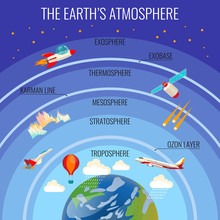
Weather and the Atmosphere: What Pilots Need to Know
Weather kills pilots. Not mechanical failure. Not running out of fuel. It’s not even pilot error in the traditional sense that kills pilots. Pilots flying into weather they’re not prepared for is a leading cause of general aviation accidents year after year. The FAA knows this. That’s why weather theory fills an entire chapter of the Pilot’s Handbook of Aeronautical…
Engines and Propellers: How the Powerplant Actually Works
The first time you walk up to a Cessna 172 and peer into the cowling during preflight, you’re looking at an aircraft engine with roughly 180 horsepower worth of carefully balanced mechanical complexity. Cylinders, pistons, a crankshaft, spark plugs, magnetos, a carburetor or fuel injection system, oil lines, cooling baffles, and a propeller bolted to the front. It’s a lot.…
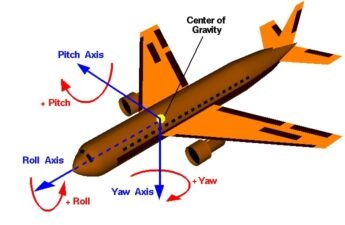
Flight Controls: How Pilots Actually Steer an Airplane
Here’s something that surprises almost everyone the first time they learn it: you don’t “steer” an airplane the same way you steer a car. In a car, you turn the steering wheel and the front wheels point in the new direction. The car follows. Simple and linear. In an airplane, you move a control wheel (or stick, depending on the…