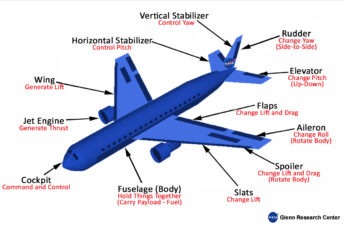
Pull up a photo of any small airplane, like a Cessna, a Piper, a Diamond. Look at it for a moment. Now ask yourself: do you know what every single part does? Most people can point to the wings and the engine. After that, it gets fuzzy fast. What’s that fin at the tail? Why does it need both a…
Author: cupertinoaviation
Airfoils: How the Shape of a Wing Changes Everything
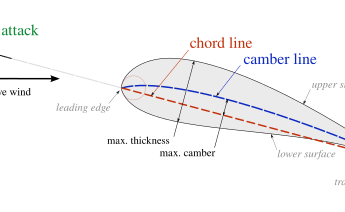
In the Why Things Fly post, we explored the four forces that keep every airplane in the sky. But there’s a detail we glossed over. What determines whether a plane can fly fast or slow, land on short runways or need miles of pavement, and stall gently or drop like a rock? That detail is the airfoil: the specific cross-sectional…
Why Things Fly: The Science Behind Every Airplane
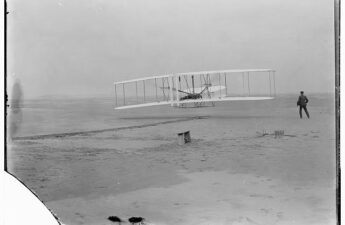
On the morning of December 17, 1903, a man named John T. Daniels crouched behind a camera on a cold, windy beach in North Carolina. He had never taken a photograph in his life. Wilbur Wright handed him a rubber bulb and told him to squeeze it if anything interesting happens. Something interesting happened. Daniels squeezed. And the resulting image,…
Lift and Basic Aerodynamics
Before understanding how an airplane is controlled, it is important to first understand the four forces that affect an airplane in flight. These are thrust, drag, lift, and weight. After understanding these basics of aerodynamics we can move on to understanding the airplane itself. If you need a refresher on some definitions, check out Basic Aerodynamic Terms and Definitions. The…